



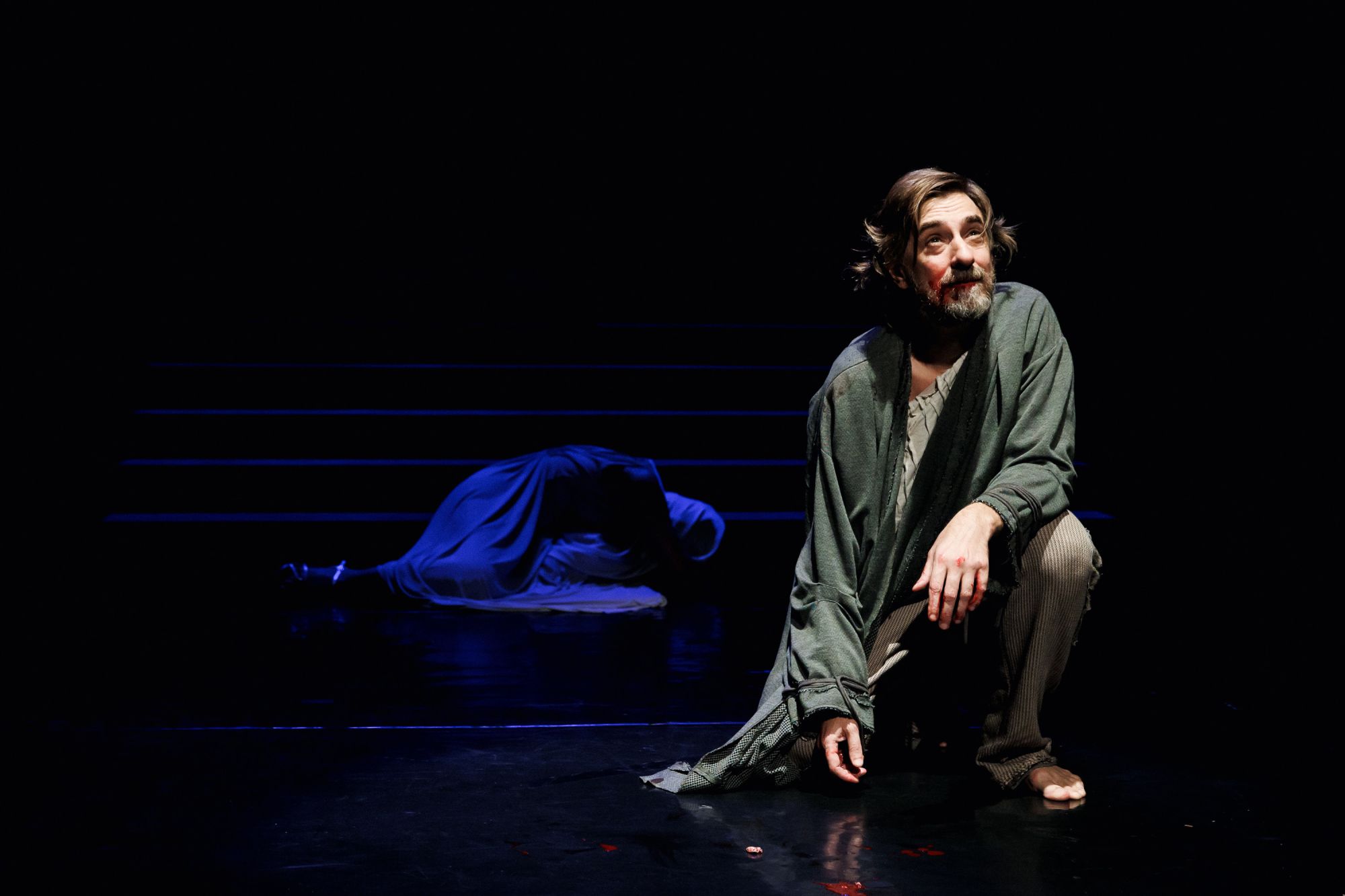
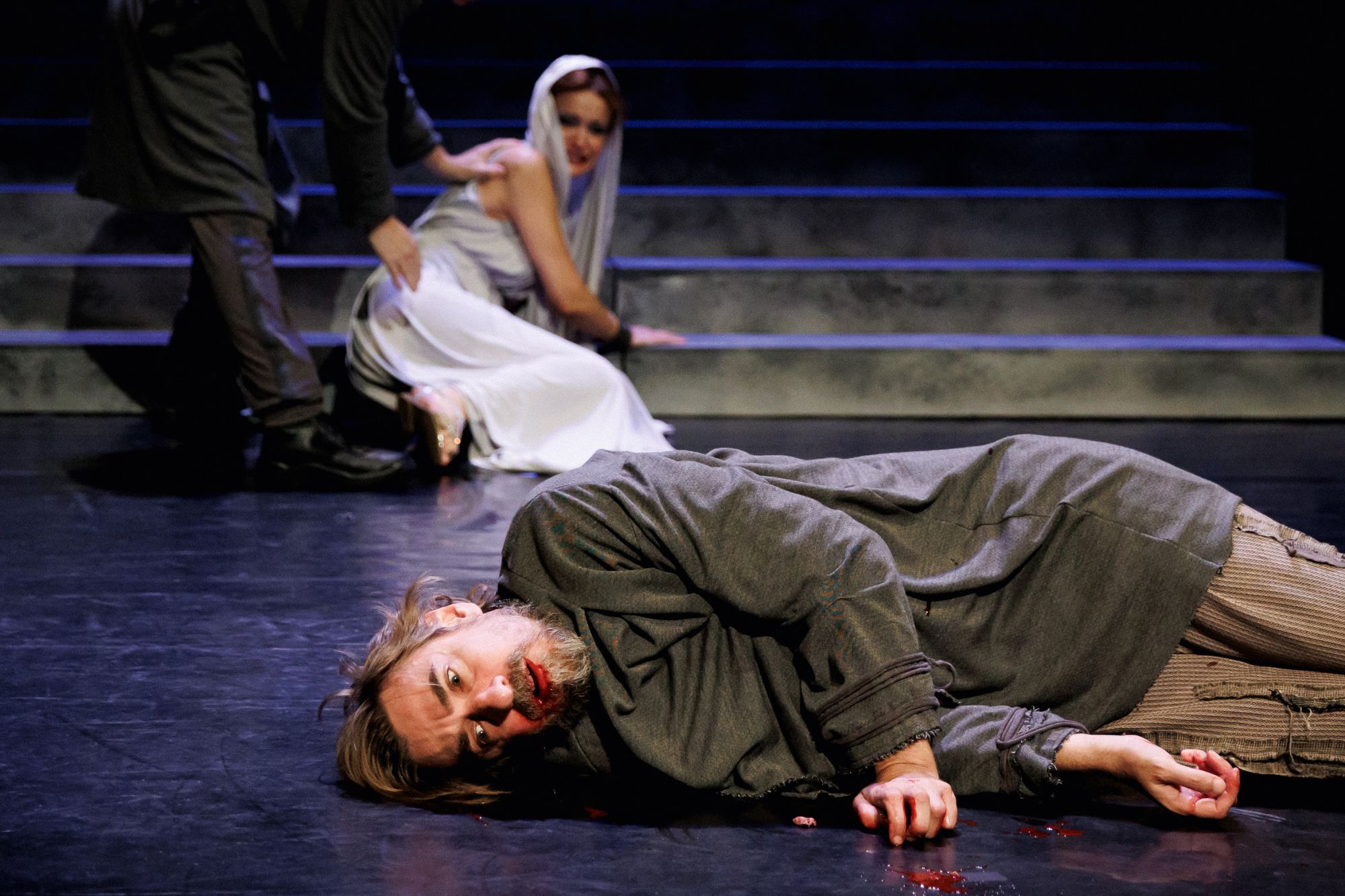
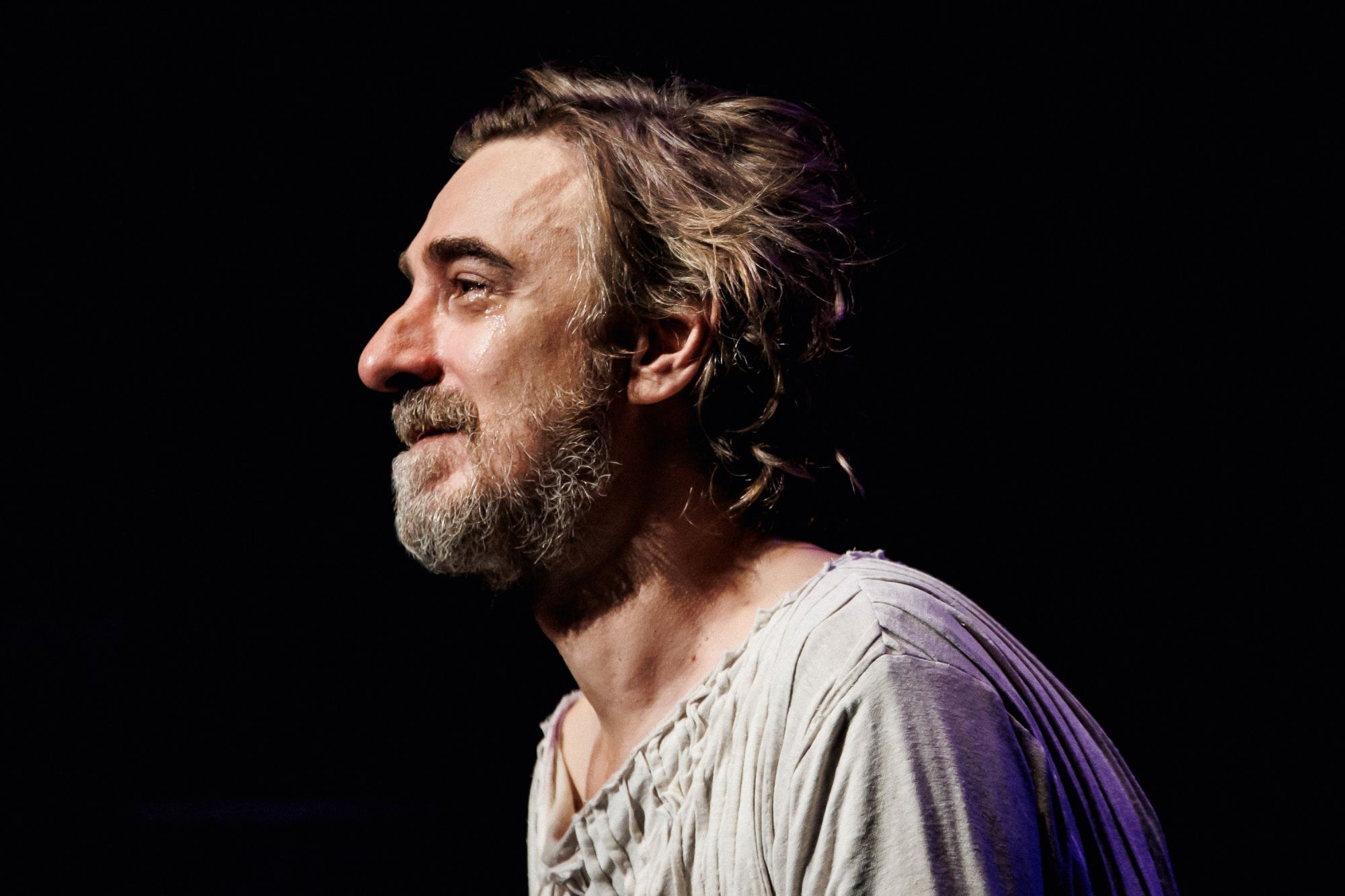
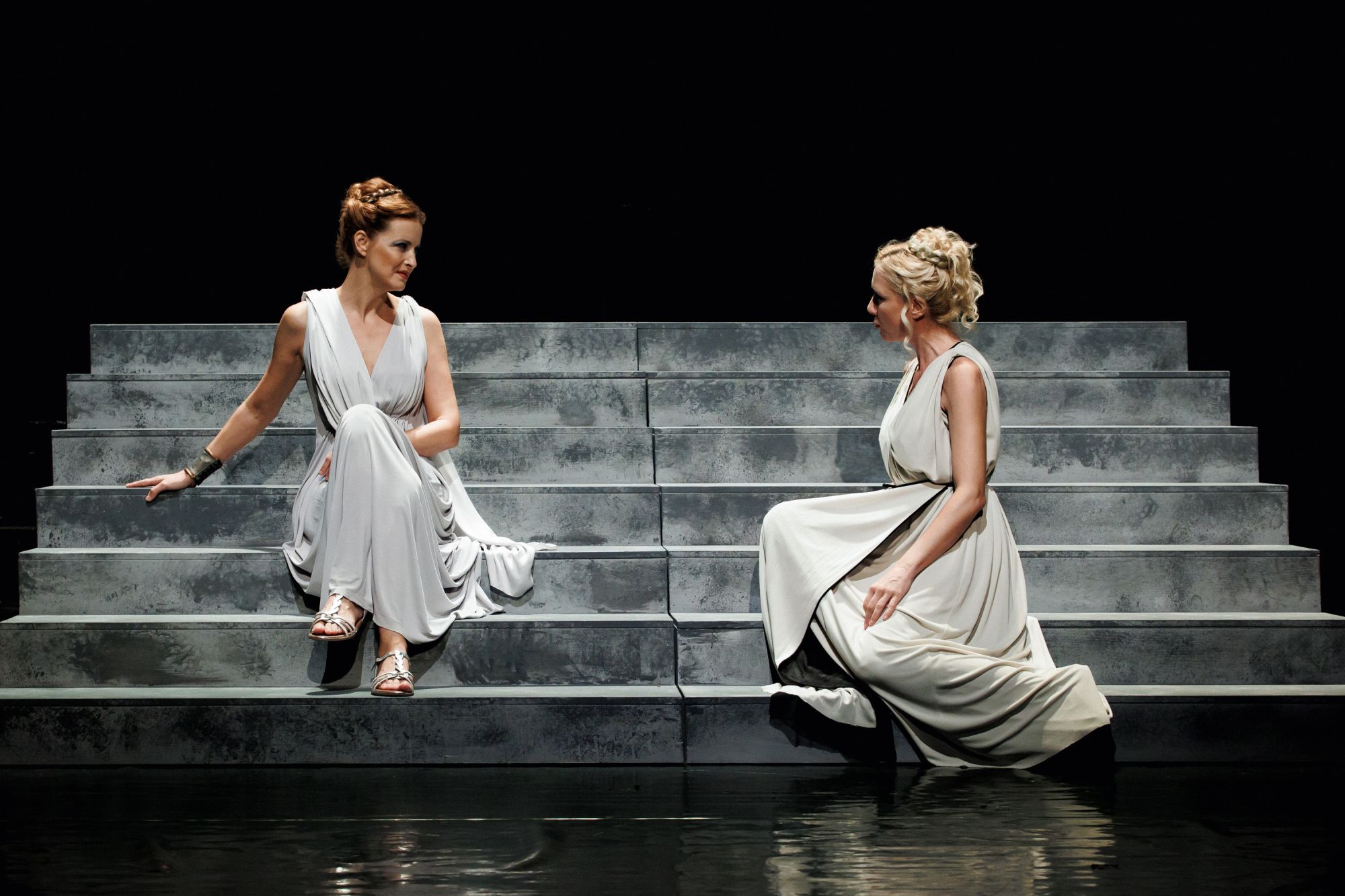
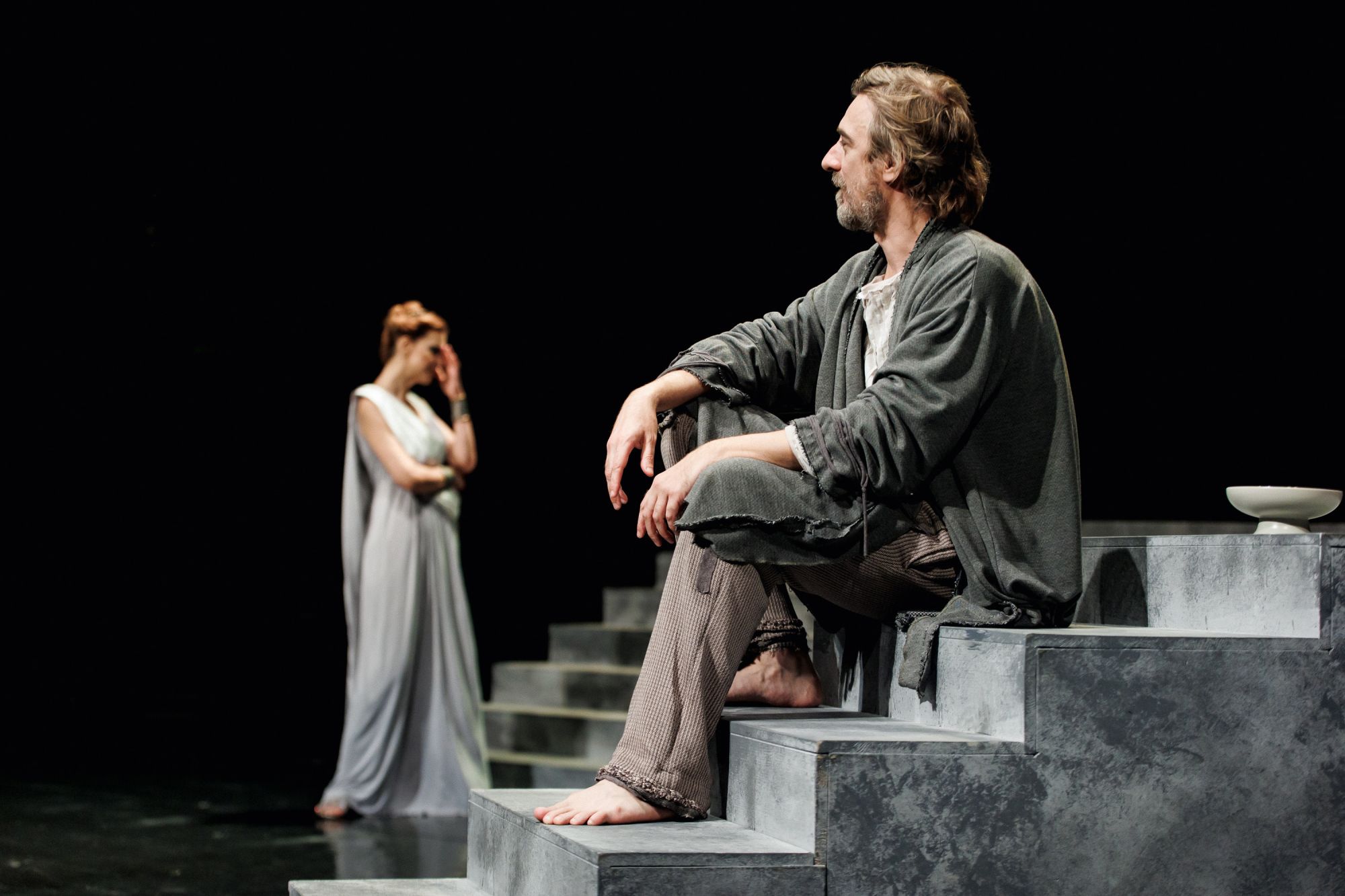
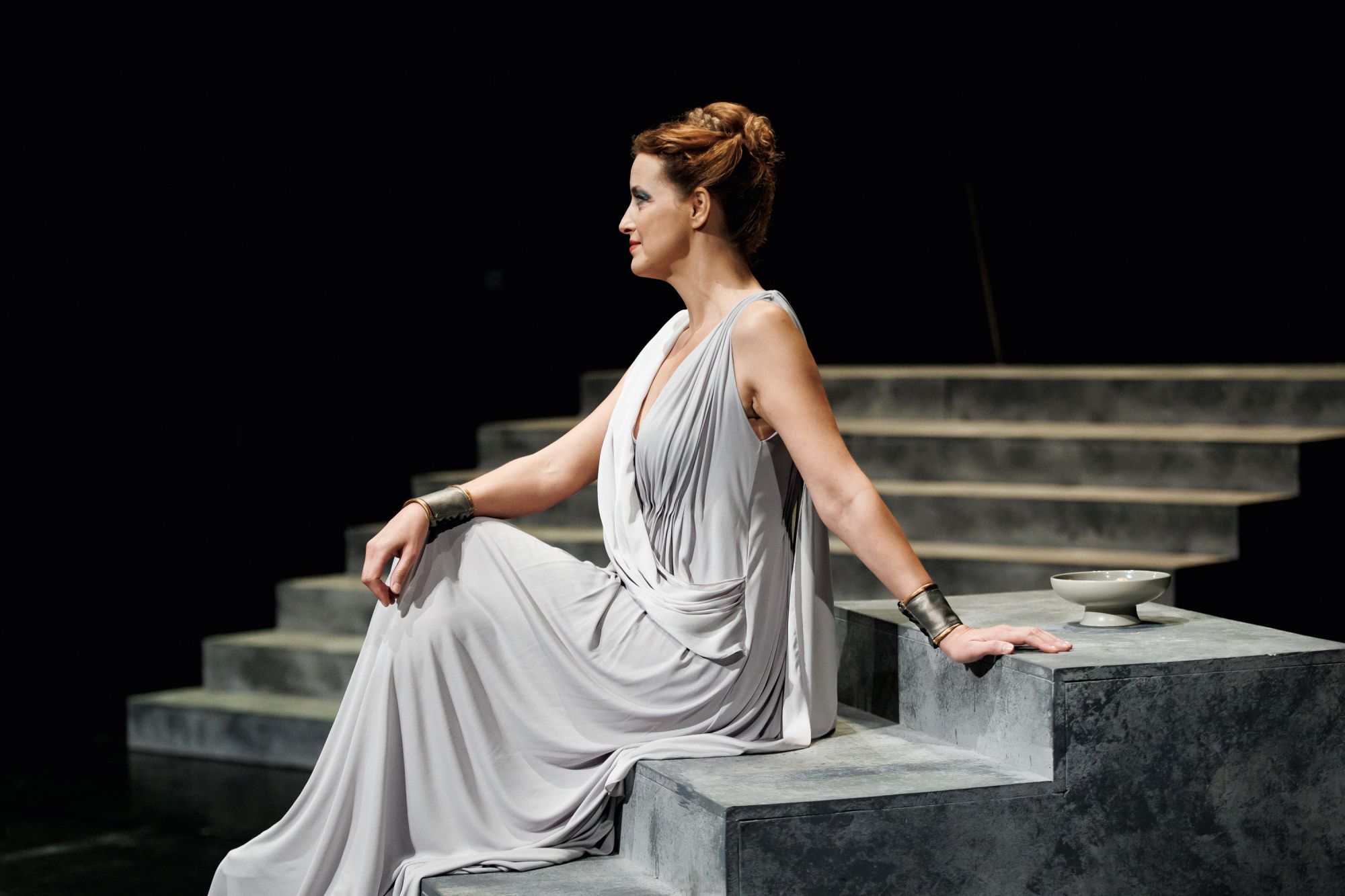
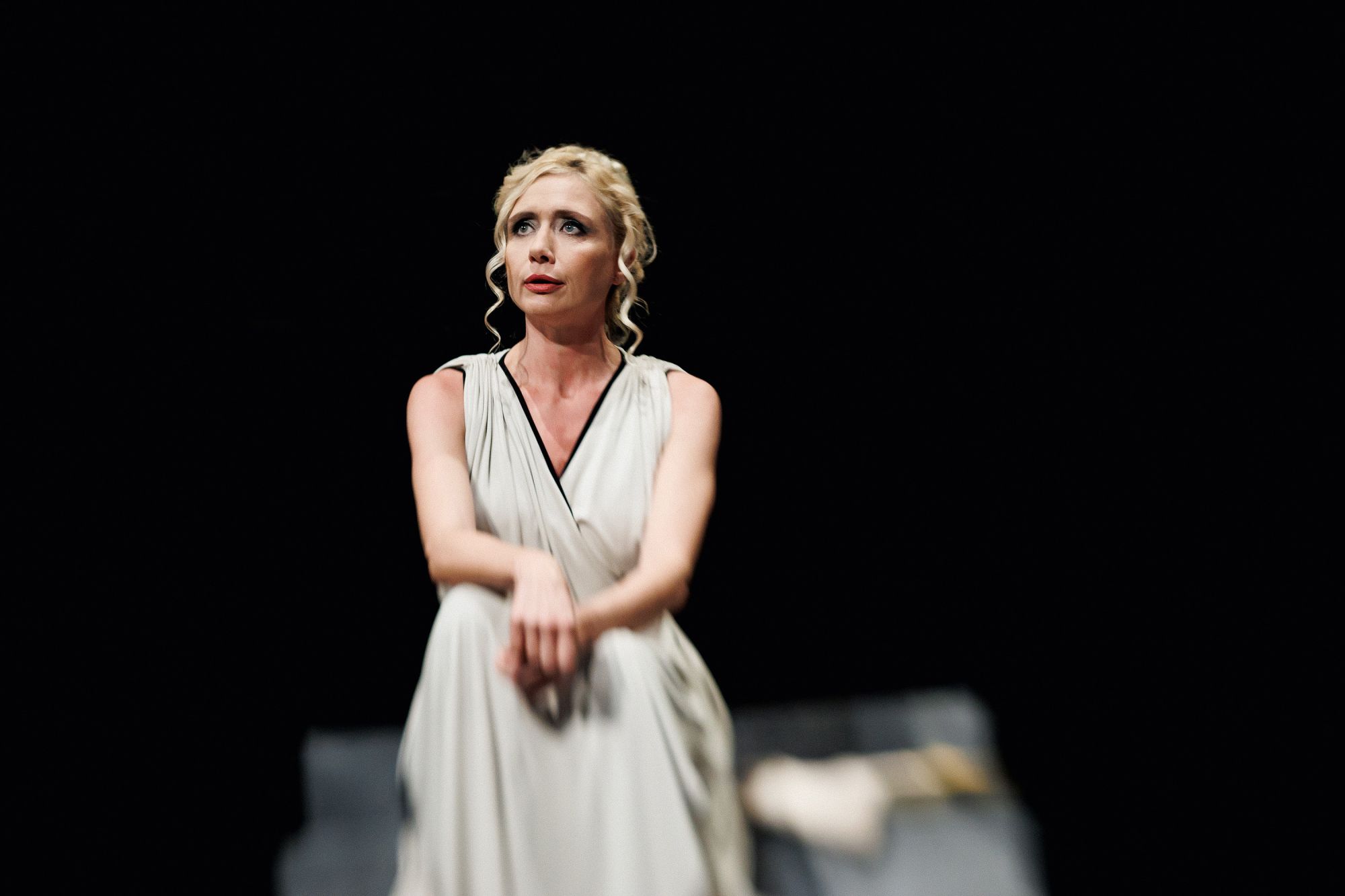
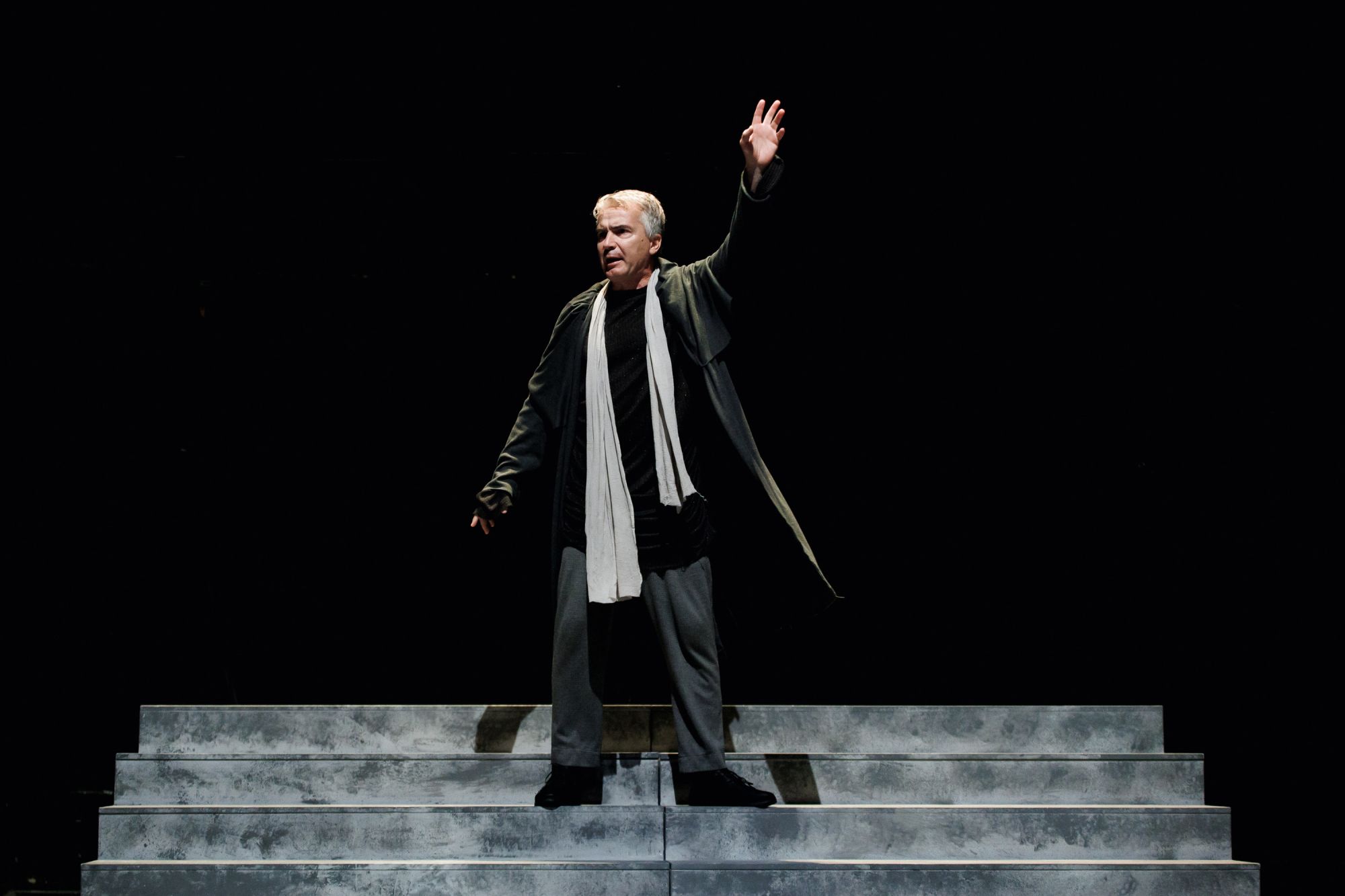
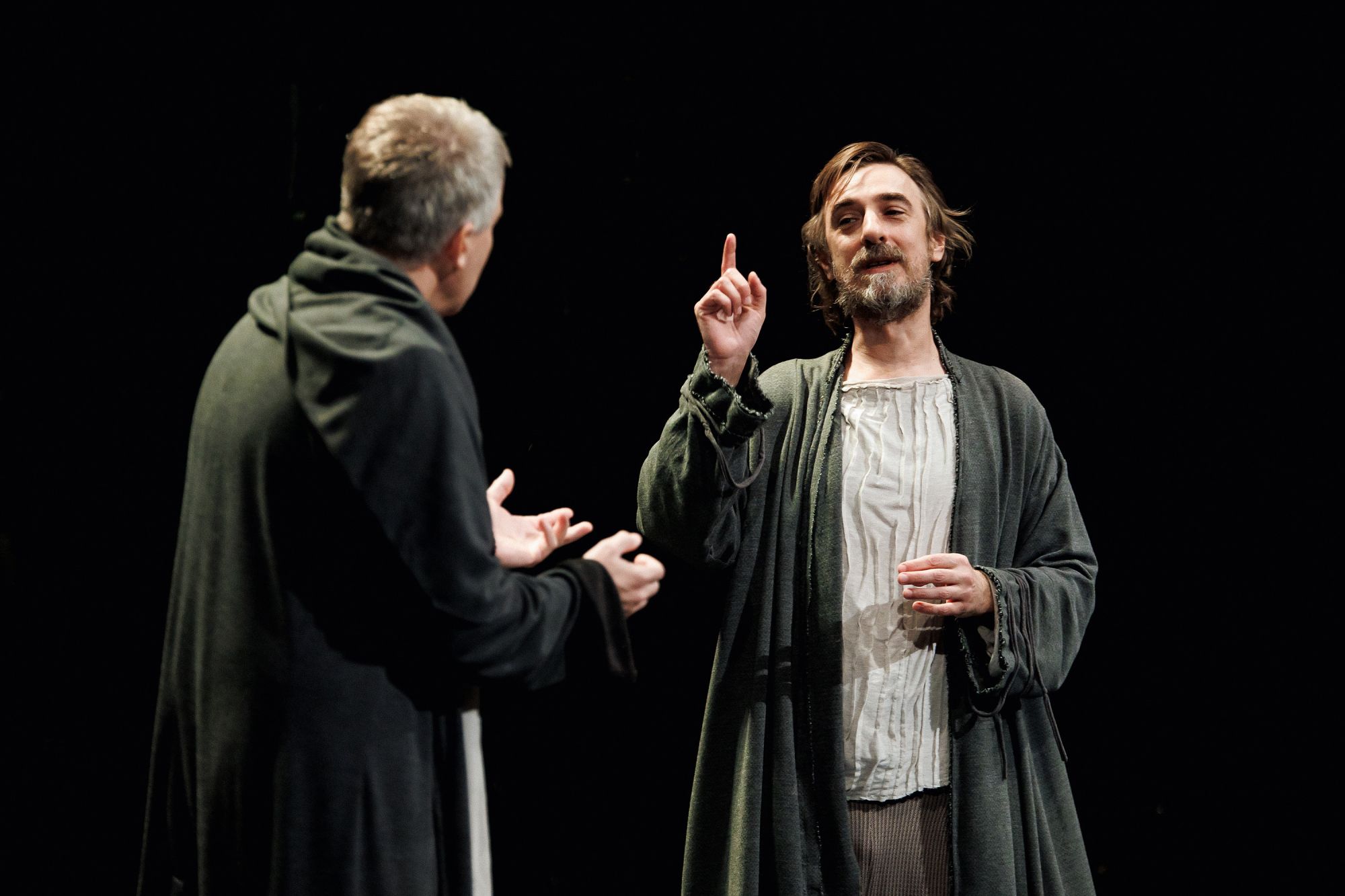
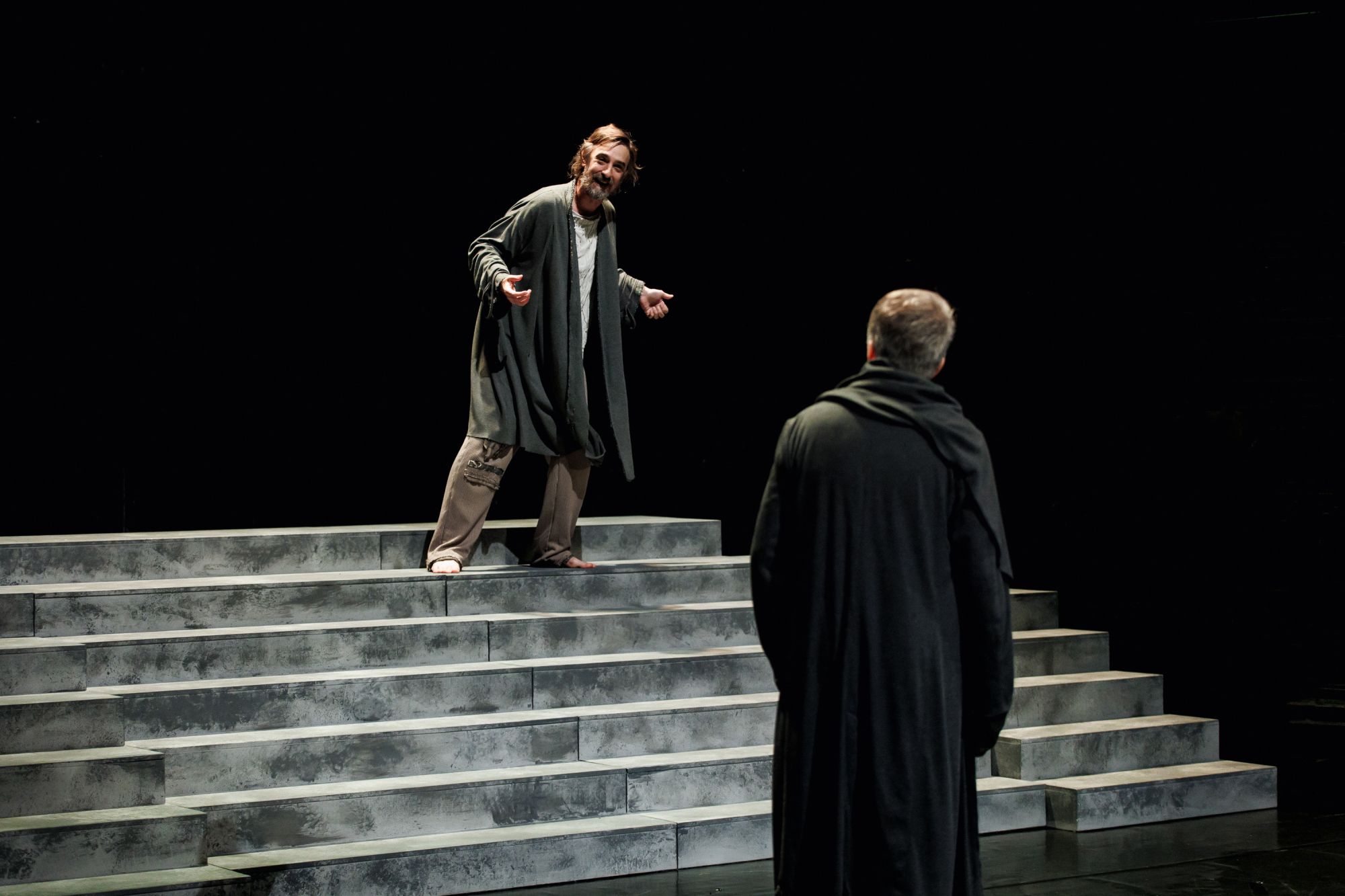
Bojan Dimitrijević
Jugoslav Krajnov
Jelena Stupljanin/Milica Zarić
Sanja Ristić Krajnov
Production: Tivat Cultural Centre and Bitef Theatre
Playwright: Howard Brenton
Translated from English by: Đorđe Krivokapić
Director and Set Designer: Nebojša Bradić
Costume Designer: Marina Vukasović Medenica
Stage Speech: Dijana Marojević
Composer and Drawings: Aleksandra Vrebalov
Sound Designer: Zoran Jerković
Lighting Designer: Radomir Stamenković
Photographer: Nata Korenovskaia
Video Production: Dejan Tasić
Did Socrates “cancel” himself? Did he deliberately enrage the jury with an excessively comic speech during his trial in Athens in 399 BC, in order to ensure that they would sentence him to death?
Socrates was accused of denying the existence of the gods, inventing new deities, and corrupting the youth of Athens. In reality, Socrates was deeply religious, and accusing him of blasphemy was a gross injustice.
But the powerful had had enough of Socrates. This unremarkable seventy-year-old man, who spent his time in public places surrounded by devoted students, teaching them that the unexamined life is not worth living, that we must constantly learn, and that we know nothing, was a threat to the established order. And the city was desperate for stability.
Athenian democracy in 399 BC was fragile. It had been weakened by a brutal oligarchic coup in 411 BC, which collapsed after a year. Another coup followed when Athens surrendered to Sparta in 404 BC. Democracy was restored, but national pride had been deeply wounded.
The economy had suffered: Spartan troops had burned estates, and an epidemic of plague had broken out. The people were angry, exhausted and eager to blame someone. In dark times, beheading celebrated fellow citizens was one of Athens’ favourite sporting pastimes.
Socrates was a celebrity. He was the most famous man in the city, but he was not universally liked. He had held public office only once, serving as president of the Assembly for just one day. He used his position to try to prevent the execution of six generals at a time when the entire city was clamouring for their blood, arguing that the trial was illegal.
In the ancient Agora, many things happened simultaneously, requiring people to divide their attention and consequently diminishing the dominant influence of any single activity. The experience of the Agora, therefore, could never be entirely focused. On the Pnyx, where trials were held, a skilled speaker could talk for hours while everyone else was forced to sit and listen until he had finished.
Here, it is possible to establish a connection between the past and the present. In ancient Athens, people were particularly wary of the Trumps of their time. Cleon, for example, was a wealthy Greek who presented himself as a “man of the people” and positioned himself in opposition to the aristocrat Pericles. He would tie his cloak around his waist in the manner of peasants and was particularly fond of attracting attention through vulgar language and highly personal attacks on others.
Demagogues like Cleon thrived in ochlocracies. The city streets were often ruled by mobs that descended into violent frenzy. For every Cleon, hundreds more would follow. They knew how to speak with authority, radiated confidence and appeared convincing. The weight of their words gradually increased, while the audience’s capacity for reason diminished. Little by little, members of the jury would become exhausted, indifferent or bored. Only then would they cast their votes.
The jury, consisting of 501 members, was ready to clip Socrates’ wings and, in the first ballot, convicted him by a narrow majority. The law allowed Socrates to propose an alternative penalty – exile or a substantial fine – which the court would have accepted. In that case, Socrates could have gone home.
But he did not ask for exile or a monetary fine. Instead, he proposed that he be granted lifetime sustenance at public expense in the Prytaneion, an honour reserved for national heroes. The enraged judges voted again and confirmed the death sentence.
Then, in prison, Socrates refused to escape, arguing that doing so would destroy his reputation and that he had to respect the laws of democracy, even when they had been corrupted by his enemies.
Was he testing the state by bringing about his own destruction? Or was this the culmination of a profound inquiry through which Socrates demonstrated that the soul outlives death?
Great stories transcend the significance of the moment in which they were created. Nietzsche wrote: “At last, knowledge will reach out its hand to what belongs to it; it will seek to rule and possess, and you with it.”
7th VIMINACIUM FESTIVAL
-
Golden Fibula – Best Actor of the Festival Award – Bojan Dimitrijević
-
“Uzdarje” Audience Award for Actor of the Evening – Bojan Dimitrijević
10th “BUCINI DANI” FESTIVAL – ALEKSANDROVAC
– “Golden Grain” Award for Best Actor at the Festival – Bojan Dimitrijević
12th NOVI TVRĐAVA TEATAR FESTIVAL – ČORTANOVCI
-
Best Production Award
-
Best Director Award – Nebojša Bradić, for The Silencing of Socrates
-
Best Actress Award – Sanja Ristić Krajnov, for her portrayal of Xanthippe
34th “DANI ZORANA RADMILOVIĆA” FESTIVAL – ZAJEČAR
– “Zoran’s Moustache” Award for Actor of the Evening – Bojan Dimitrijević
45th “BORINI POZORIŠNI DANI” FESTIVAL – VRANJE
– “Borisav Stanković” Award for Best Male Performance – Bojan Dimitrijević